Hut to hut hiking Alta Via 1 is no small feat, and when it comes to packing your bag, you want to make sure you aren’t over doing it. You will be carrying everything you bring with you for 7-10 days depending on your route, so the more weight you have, the more struggle the hikes will be. That being said, when my friend Elizabeth and I hiked the Dolomites in June, we had a few unnecessary, but non-negotiable things that we both brought with us. It’s your trip, and it’s your packing list. I’m just here to guide and recommend things after I’ve completed the hike! Hopefully I can provide some insight for you.
The Necessities
1. A Sturdy Backpack
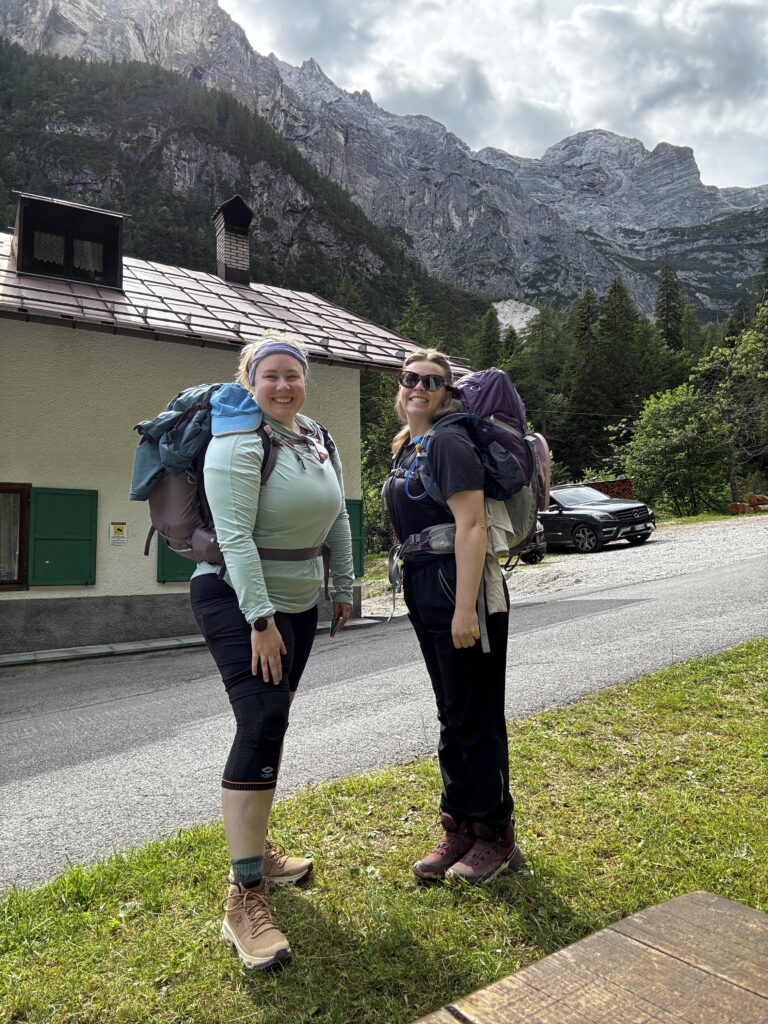
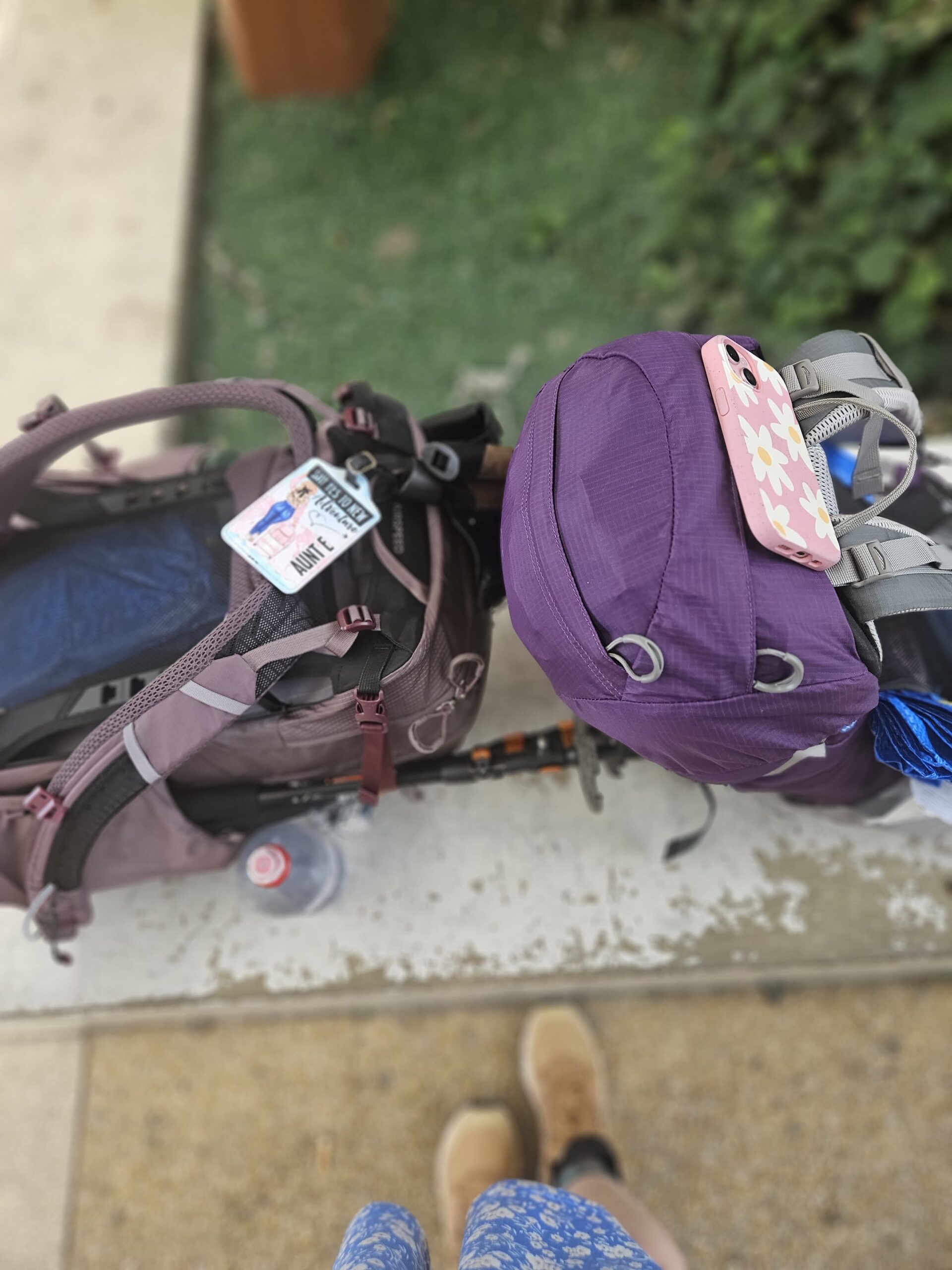
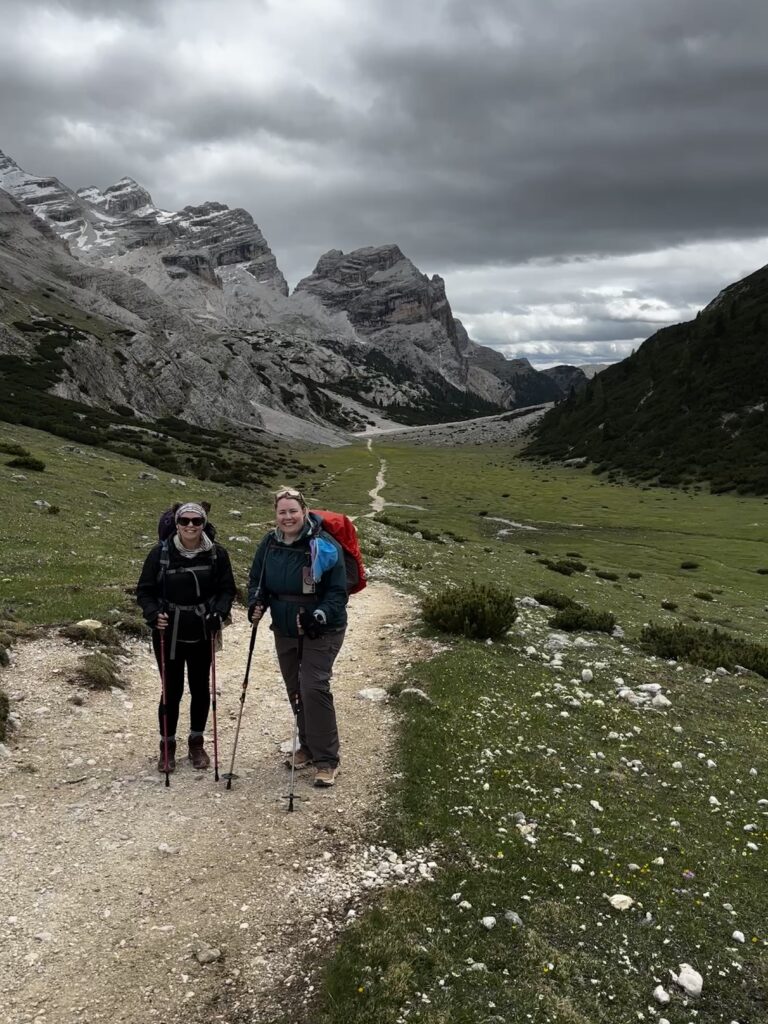
I did a lot of research on what bag to bring on this trip because it was my first time hiking for this long. Osprey, is a brand I’ve used before, and I think a lot of people go to them for backpacking. Most Ospreys come with a rain protection cover which you can see on both of our bags in the picture on the right. Sizing will depend on you, but I was very happy with my 32 L pack, and I don’t think anyone needs more than a 36L pack on a hike like this.
That link is the closest thing I can show you to what I have. I got mine on Vinted, which I highly recommend if you are trying to save a few bucks. Just make sure it is in excellent condition. You don’t want your strap breaking mid-hike! See the photos for how my pack looked all packed up.
I’m going to throw this on the packing list too because it is kind of a package deal: a water bladder. I bought a 2 L bladder from Mountain Warehouse and it was sufficient for me. Every liter of water weighs about 1 kg or 2.2 pounds. So keep that in mind. On our shorter days, I didn’t always fill my bladder all the way. It also makes packing tighter because obviously the water will take up space in your pack. Keep these things in mind.
2. Hiking Boots
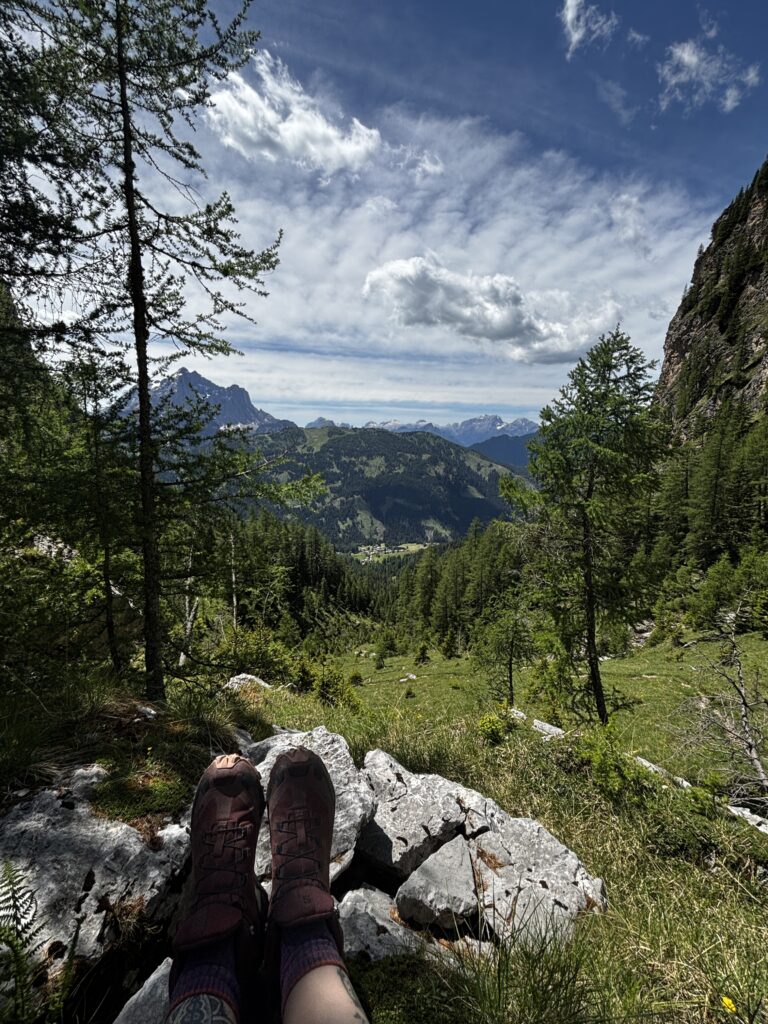
Obviously this is going to be an important one. The good news is, you’ll be wearing them instead of carrying them. These hikes are no joke, so you need a really good, solid pair of boots that are at least partly broken in. I would say it’s almost inevitable that you will get blisters at some point, but the better the shoe, the less likely it will be. These are the closest thing I can find to the shoes I have and what I wore the entire time (you can see mine in the photos above). Salomon has unfortunately discontinued the exact ones, but they are so good! I don’t think it’s necessary to have 2 pairs of hiking boots that you can switch every other day. But I’m sure some people do. (Note: I’m not an affiliate with them, it’s just my honest experience using their product.)
Also, don’t forget camp shoes. Whether it’s a cheap pair of lightweight flip flops or a nice pair of trail sandals. You’re going to want something to wear in and around the huts that aren’t your boots. Taking those off at the end of the day is the best feeling, so something where your toes can breathe is recommended (by me).
3. Hiking Clothing
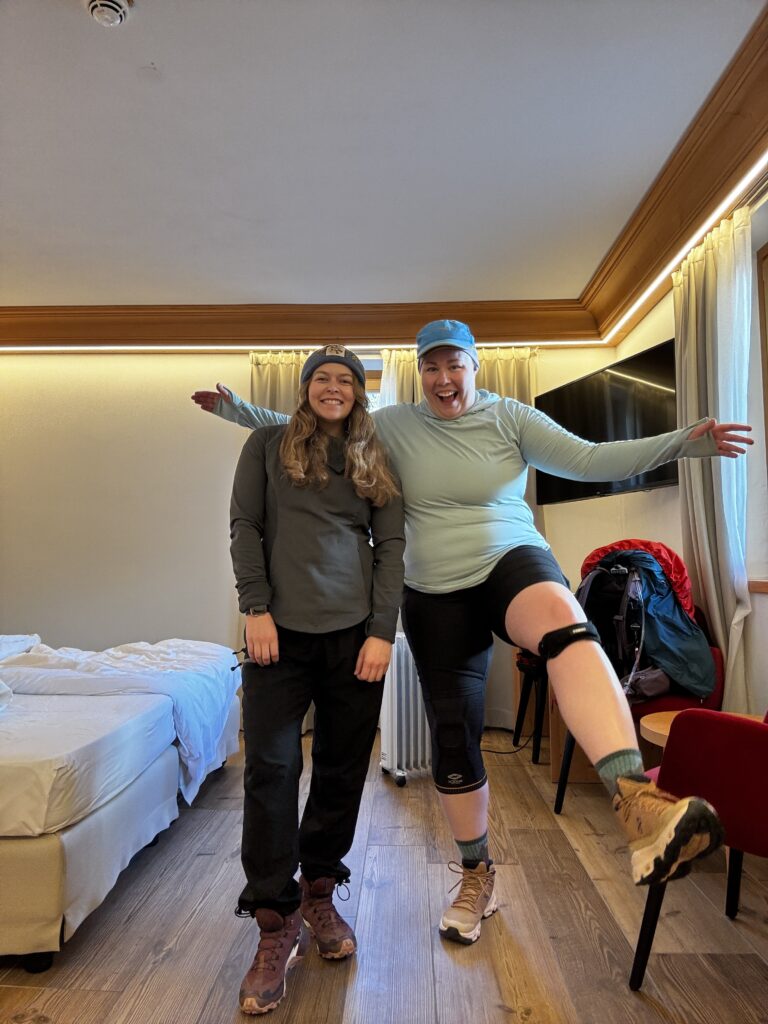
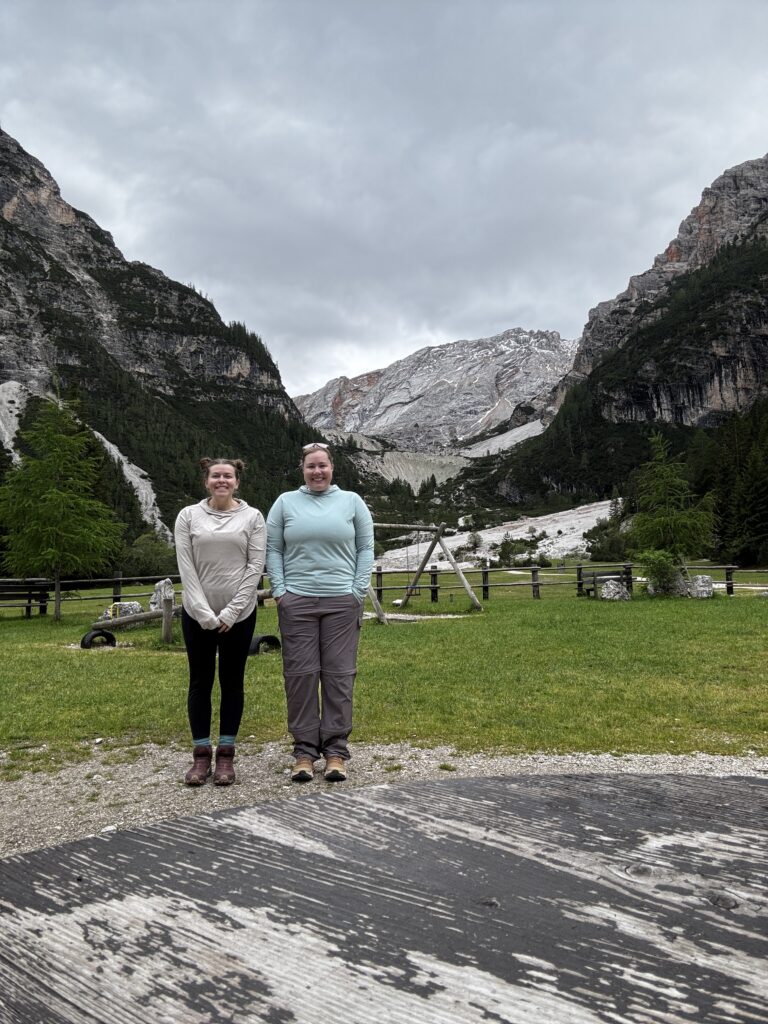
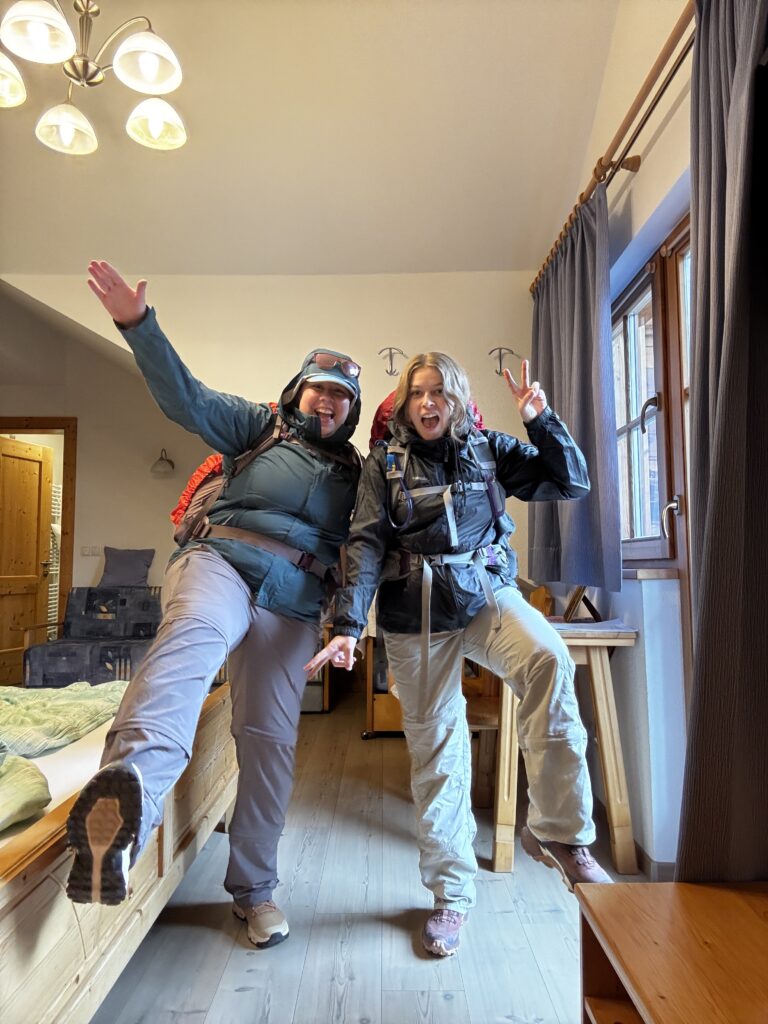
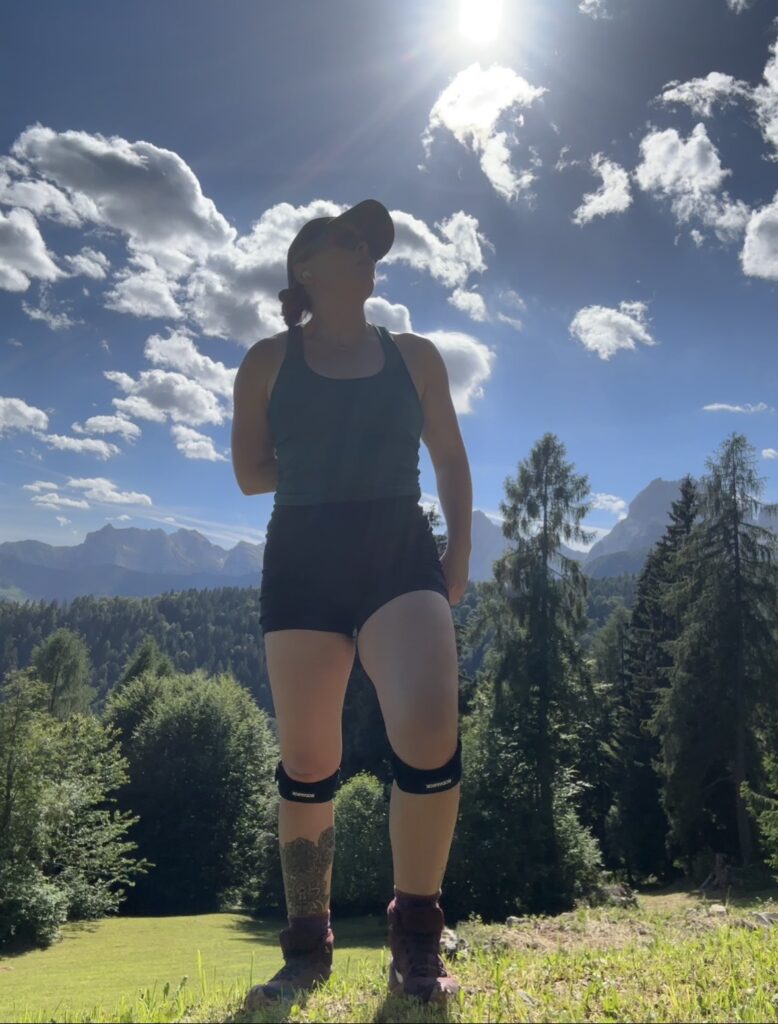
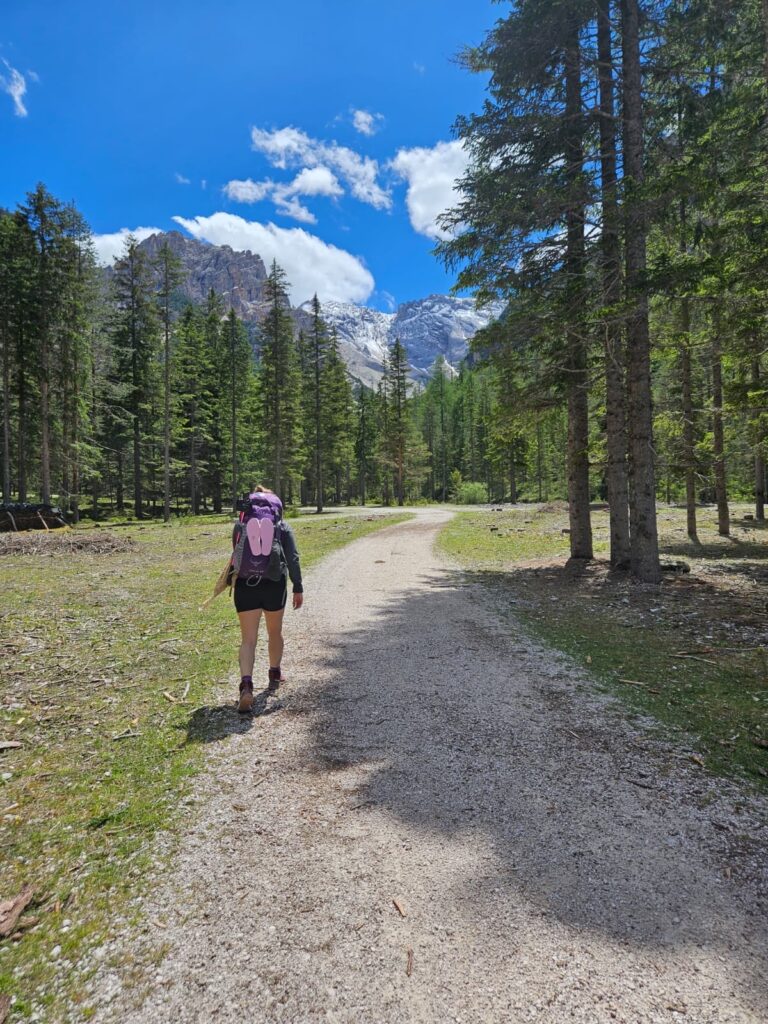
To be totally honestly, I wish I had brought less clothing on this trip. You really don’t need more than 3 or 4 outfits. You can mix and match, and honestly, some people were wearing the same thing every day I saw them. No one cares in the mountains, okay? And some of the facilities have laundry if you want to clean up a bit more. Sink laundry is always an option.
One thing neither of us negotiated on though, was underwear. We brought enough to have a pair a day, and I never regretted that. They don’t weigh much anyways. However, your hiking clothes will. And they will take up a majority of your pack. So trust me, and don’t bring more than 4 hiking fits. Bringing layers and your lightweight stuff is also a good idea. Here are some of the outfits we wore. And don’t forget a raincoat and a pair of pajamas!
4. Wool Socks or Sweat Wicking Socks
You have to take care of your feet. Socks are going to be the first defense in doing that, after having a good shoe. So you want to have wool or some kind of sweat wicking material in your socks so they won’t stay wet and rub. I use Darn Tough socks, and they worked great. I brought 3 pairs of socks for 8 days of hiking. Honestly 2 probably would’ve been fine. You do not need a pair for every day, I promise. It is weight and space you can’t waste. You can do sink laundry, or just let them dry out over night. (Again, no affiliate here, just really love the product.)
5. Bandages, MoleSkin, Tape, etc.
Continuing on the foot theme portion of your packing list, you want to have tape and bandaids to protect from rubbing or to cover blisters you already have. I really like MoleSkin, and that’s what I wrapped my toes with every day. I bought the sheets so I could cut them how I like, but it comes in all different ways. Unfortunately, I still got blisters but they were much more manageable and definitely not as bad as they could have been. Just take care of your feet okay? Also this takes up very little space and weight in your pack, so there is no reason not to have some on hand just in case. Plus, you could always take a little spill and need a bandaid for something else.
6. Hiking Poles
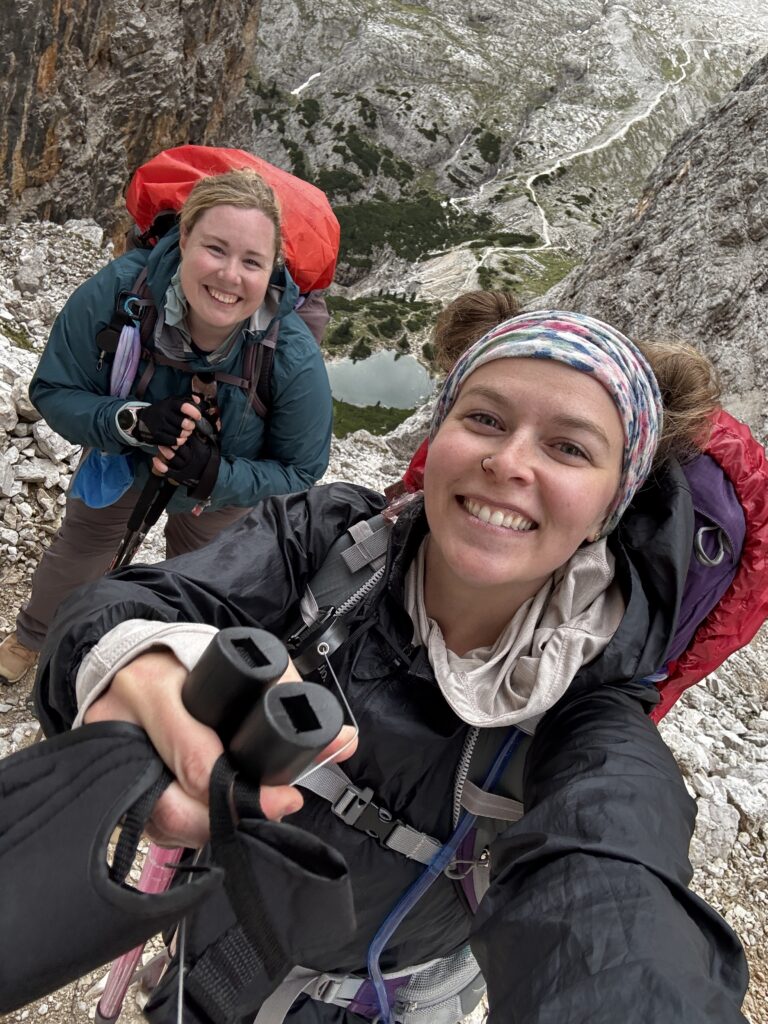
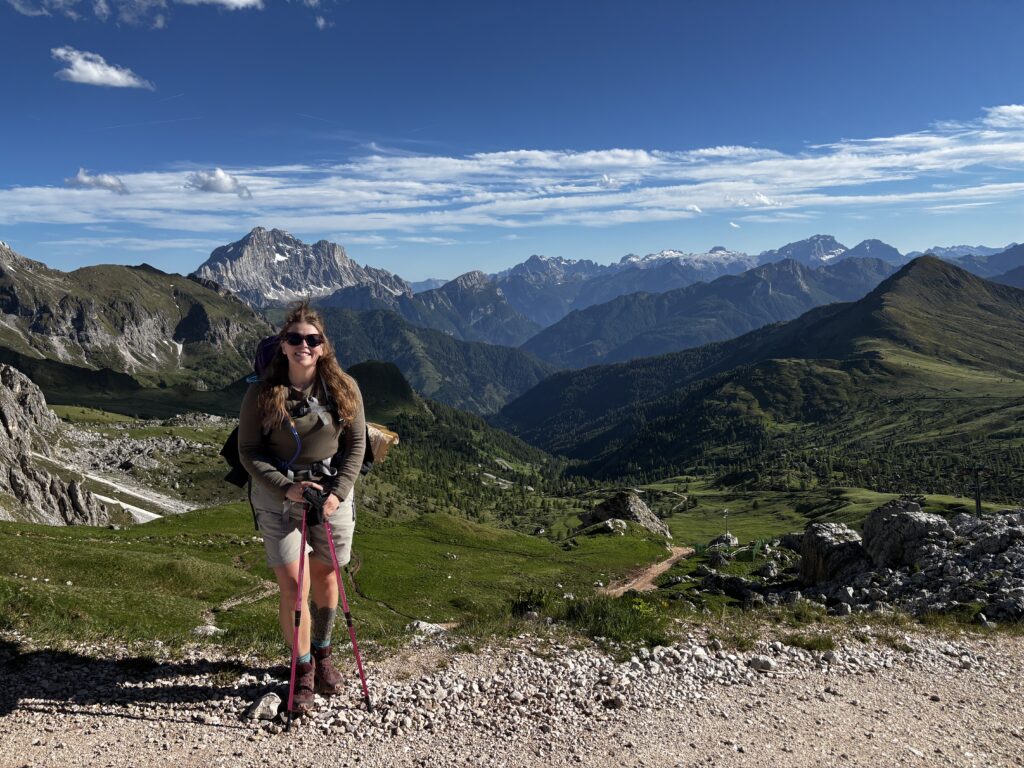
While there were plenty of people on the trails without them, I would have struggled a lot more without my hiking poles. They can be quite inexpensive and can really save your legs on these long treks. Plus, when you don’t need them, you can just attach them to your backpack. They weigh next to nothing, so again, not a big hassle to have if you aren’t using them 100% of the time. You can see my pink poles (which I also bought on Vinted) in the picture below! Adding to this – if you need knee braces or any other kind of support for your legs while you hike, make sure to add them to your packing list. I liked using the knee wraps when I did the big decline days.
7. Electrolytes
I brought my favorite electrolyte sticks, Elizabeth had her salt tablets and her favorite electrolyte packets, and some of the rifugios we stopped at had Lucozade or Gatorade drinks. Keeping hydrated is one of the most important things you can do along these trails, so don’t forget to add them to your packing list. You are burning tons of calories, sweating, and exerting more energy than you are most likely used to for days on end. The last thing you need is to pass out from dehydration or to have that hangover feeling the next morning because you didn’t drink enough water.
8. Cash
This one might seem a bit out there, but you’re pretty remote a lot of the times out in the mountains, and some places don’t have wifi for a card machine to work. Having cash eliminates the worry. I got €600 out because I had to pay for a few of our rifugios when we got there. Some of them you paid in full when booking, some you paid the rest when you got there. Also if you want lunches, drinks, or any snacks, that stuff isn’t included in the boarding fees, so you can use the cash for that. Some of the huts required a few Euros for shower tokens as well.
9. Sunscreen/Sun and Wind Protection
More ways to prevent heat stroke and keep your skin protected, make sure you have sunscreen. Even if you keep a long sleeve on the whole trip, you’ll want it for your face, neck, and ears (and lips!). I also highly recommend bringing a hat to keep your scalp protected (mine did burn one day), and even a gator or something that can go around your neck. On a similar note, having protection from the wind is really important. I brought a winter hat, layers, and a wind breaker/rain coat. My headband also worked to protect my ears when the wind got strong!
10. Snacks
Snacks are a necessary part of your packing list, but you don’t need to pack 8 days worth in your pack. The rifugios have snacks to buy, so you will be okay. We bought some granola bars and sweets to have for the start of the hike, but those were gone in the first 2 days. Cash can come in handy here, too. We restocked every chance we got and never went hungry! Just don’t forget if you need something.
Things the Huts Require
Your packing list should definitely contain these items, unless you’d rather buy them at the huts. It was annoying having to carry them around when not every hut required them, but it is more hygienic, so I can’t complain too much!
1. Sleeping Bag Liner
I’m assuming the only reason for this is hygiene purposes. Since we went early in the season, the beds were all really nice and clean. There were only 2 huts along our way that asked us if we had the sleeping bag liner and required you to buy one if you didn’t have it. I used mine every night because I was carrying it, but also because I don’t know who was in the bed before me.
2. Pillow Case
Pretty much the same situation as above, but honestly, it was also nice having my silk pillowcase on my pillow every night. Talk about extra? Whatever, it weighs hardly anything, and takes up very little space. Again, some of the huts required it or didn’t even have pillow cases on the pillows.
3. A Towel
This was also on the list for things that wouldn’t be provided by the huts. However, a lot of them did give us towels. For the huts where you had to pay for the shower tokens (you would get like 3 minutes of running water for €2), they didn’t provide towels. So this is really up to you and how much you need that shower at the end of the day. We went one day without, but the next day it was a paid shower again and we both decided it was necessary. You can always bring wet wipes and things with you to keep yourself clean. A smaller quick dry towel like this one will be your best friend on the trail.
The Extras
1. Sleep Mask
100% not necessary, 100% worth it. You will be sleeping in dorms with other people, going to sleep before them potentially, and dealing with a super late sunset and super early sunrise. Trust me when I say this is something you want in your pack. You can bring a crappy one you got on the airplane ride over. It takes up minimal space. Personally, I went up a couple of notches. As night shift nurse, I have to sleep during the day, and the best money I’ve ever spent was on my Manta eye mask. No affiliate here, and they can be expensive. But it is worth it. Mine even has bluetooth speakers that I can connect to my white noise on my phone. I am serious, there would have been a lot of sleepless nights without this thing.
2. Portable Charger
I was the navigator on our trip, and I also vlogged the whole thing (you can see all of them on my instagram). So I needed my phone charged to make sure we knew where we were going. I used AllTrails to go from hut to hut, which was great for the most part! I used my portable charger every day to keep my phone battery going and even to charge my watch so I could track our distance and time. Plus, the safety factor. Even if there was no service in the area we were hiking, you can do an SOS call if there is an emergency. Honestly this was a must for me.
3. Mascara
I don’t care what brand, what type, whatever. This was a must for me personally, and it took up virtually no space or weight in my pack. I wanted it, so I brought it. Simple as that.
4. Literally whatever you want.
And on that note… Seriously, it’s your trip. If you are okay with carrying it and it fits in your pack, bring it. Something that may be important to your normal routines might make the trip more enjoyable in your down time. It might be worth it! What’s on your packing list doesn’t have to be on everyone else’s.
I hope this list helps you with your packing list for your trip on Alta Via 1. It is such an amazing experience. One I will never forget! I hope to get back there some day and do it again – maybe with some via ferratas thrown in the mix! If you want to read more about hiking the Italian Dolomites, I break down our entire trip in another post HERE.
